ARGUS-1
While the crew sleeps, a small rover drives tomorrow's walking route on Mars: it clears the small rocks, flags the big ones and never touches the science. Our entry to NASA Space Apps 2026.
- Role
- NASA Space Apps Challenge 2026 · team of six
- Stack
- 100×60 cm
- table standing in for a real 10×6 m plot at Airfield Tau, Jezero, at 1:10
- ~30 ms
- per frame for our own rock detector, running on the rover's Raspberry Pi
- 0 AI
- on the motors: a deterministic executor drives, the language model only plans and narrates
In November I spent a weekend at the NASA Space Apps Challenge 2026 with five people from Hackerspace Valencia. We picked the challenge “Interplanetary Survival Guide: Martian Map” and built ARGUS-1. We did not win anything. I would do it again tomorrow.
The full story, with more photos and video, is on the blog: ARGUS-1: our rover for the NASA Space Apps Challenge 2026.
The problem: orbital maps can’t see the rock that trips you
The best orbital camera on Mars, HiRISE, sees about 25 cm per pixel. A ball-sized rock is one pixel. On foot, in a suit, carrying a load, that pixel is a fall. And Mars is 3 to 22 minutes away by radio, so nobody on Earth can drive a rover live to check the path.
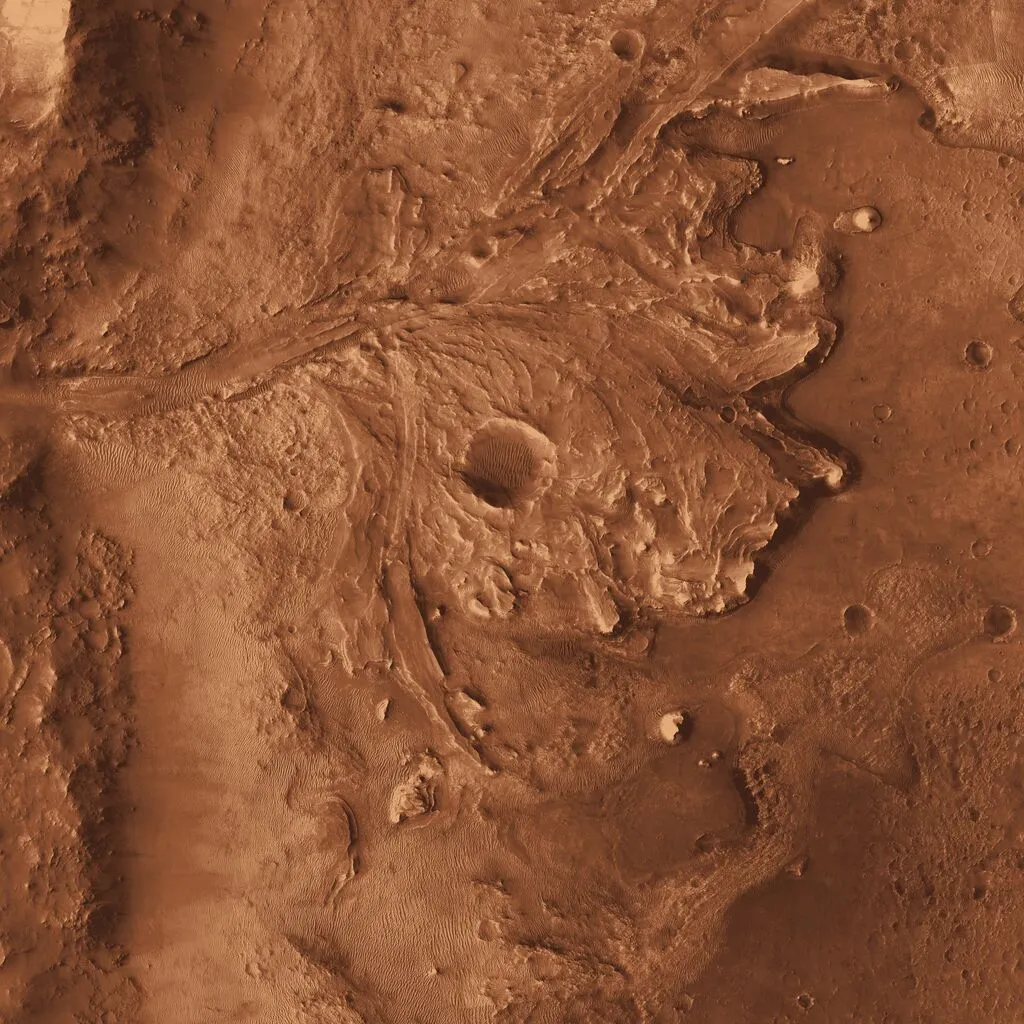
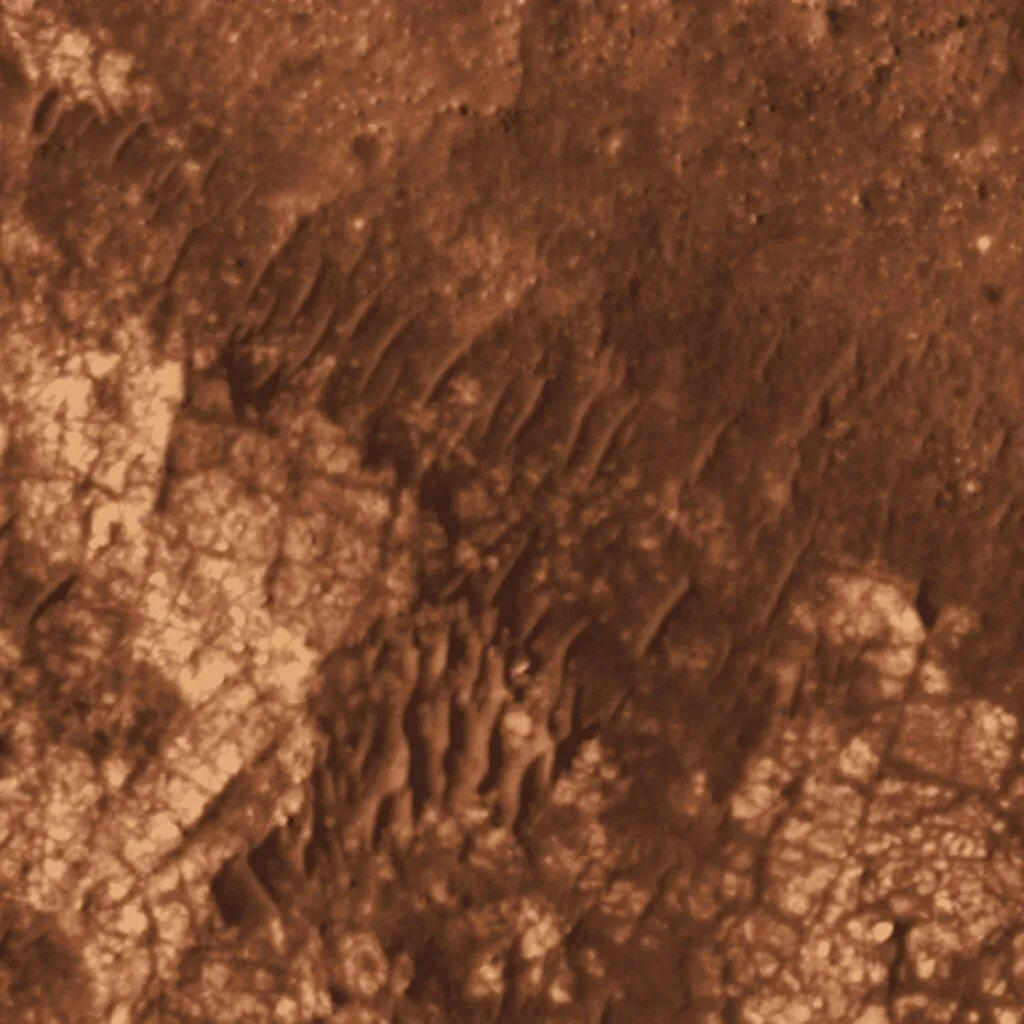
We set the story at Airfield Tau, a real spot in Jezero where Ingenuity landed on flight 62 and Perseverance stopped about 10 m away. Helicopter first, rover second, the same order as our idea.
The idea: a night shift
While the crew sleeps, small cheap rovers drive tomorrow’s walking route. Every rock on the way gets one of a few states:
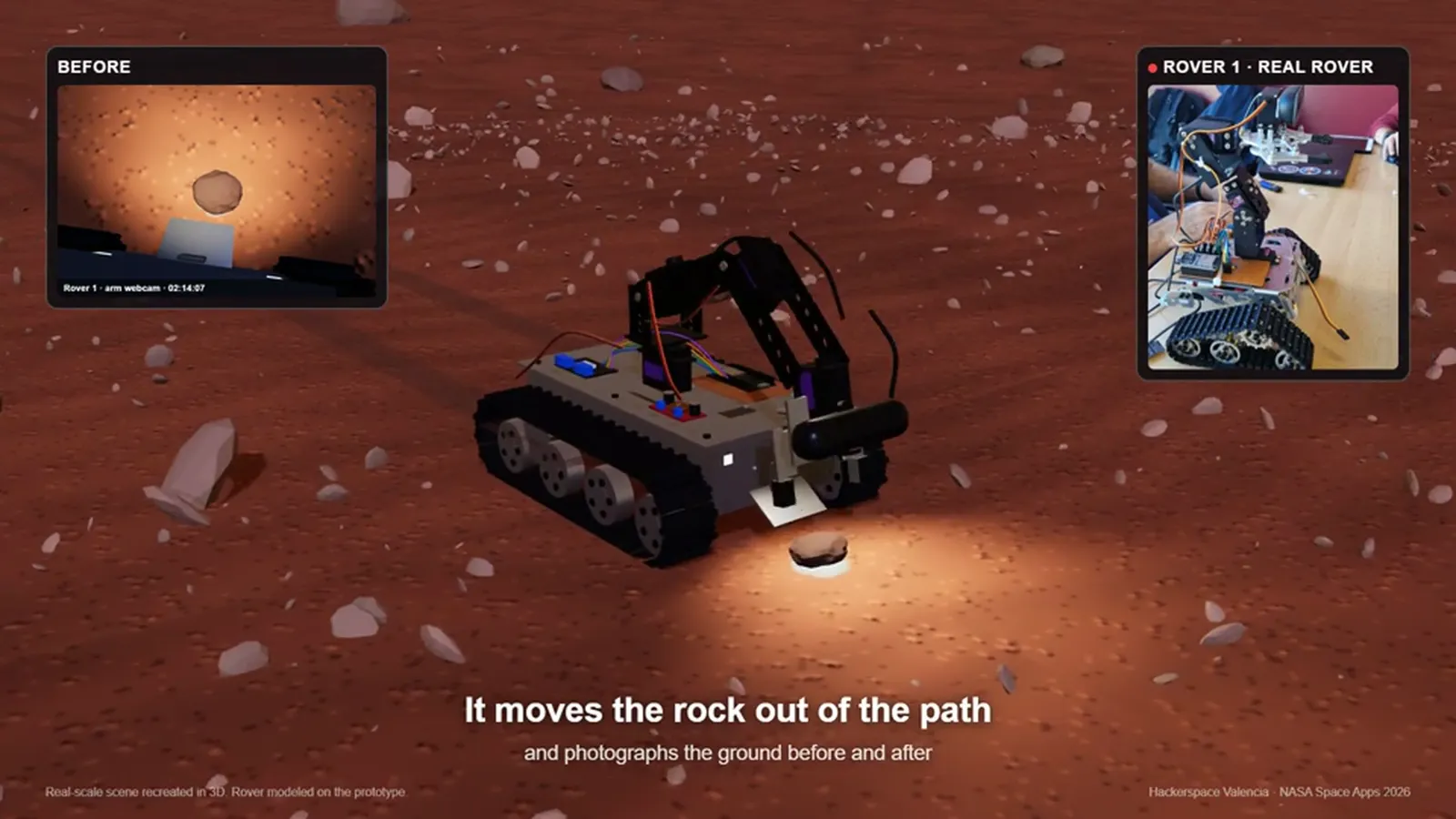
- Small rock on the path: the rover picks it up with its arm and puts it aside, with a photo before and after.
- Big rock: too heavy, so it is marked and the route goes around it.
- Science rock: photographed and never touched. Moving it would destroy the context a geologist needs.
In the morning the astronaut opens a tablet and sees which stretches were checked on the ground, not guessed from orbit.
A real rover, not a simulation
The rover is a tracked chassis machined on a CNC with an aluminium robotic arm, plus a few 3D-printed parts: pads for the gripper and a sample box. A Raspberry Pi 5 does the thinking and an ESP32 drives the motors and servos, with a heartbeat that stops everything if the Pi goes quiet. You can drive it with an Xbox controller, and two bumpers hand it over to autonomous mode.
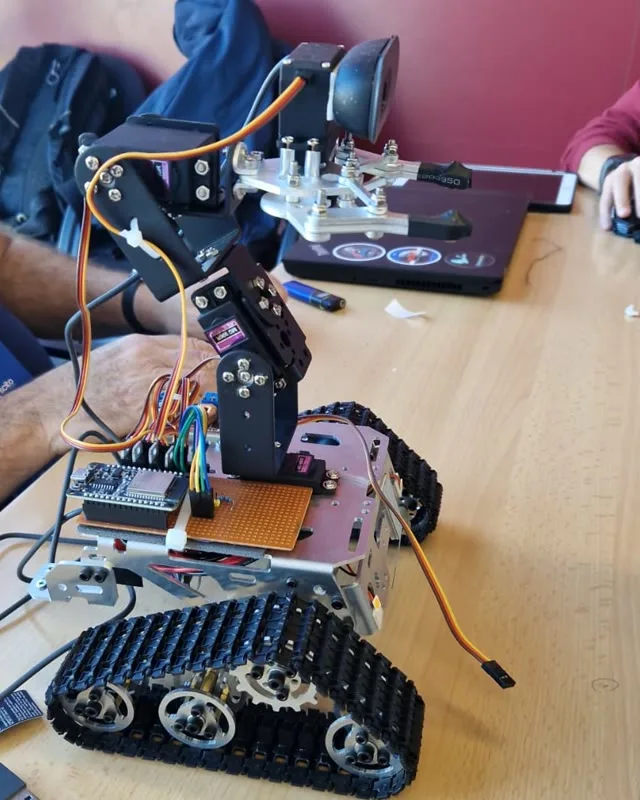
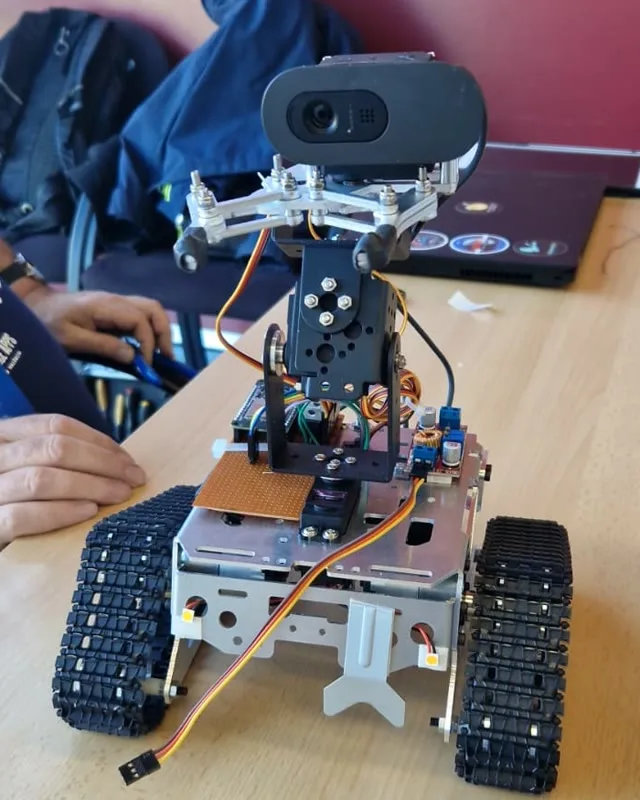
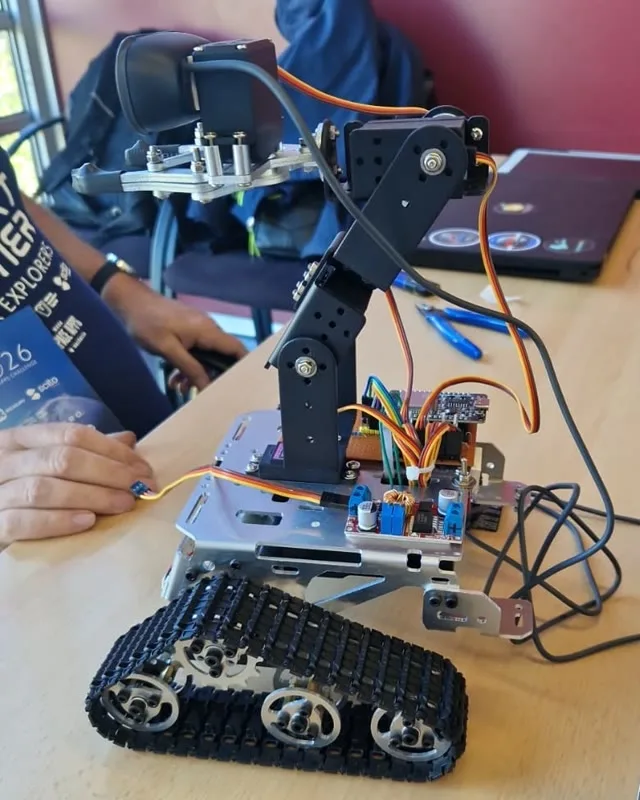
The table is 100×60 cm and stands for a 10×6 m plot at 1:10. The rocks are stand-ins: black rocks as landmarks, gold rocks as science targets, and an orange block as the one rock the arm is allowed to move.
Our own rock detector
Off-the-shelf models don’t know what a “science rock” is, so we trained our own. We recorded thousands of frames from the rover’s webcam, auto-labelled them by colour and shape, reviewed the doubtful ones by hand, and trained a small YOLO model with three classes: movable, science and landmark. Quantized to INT8, it runs on the rover’s Pi at about 30 ms per frame, with no cloud.
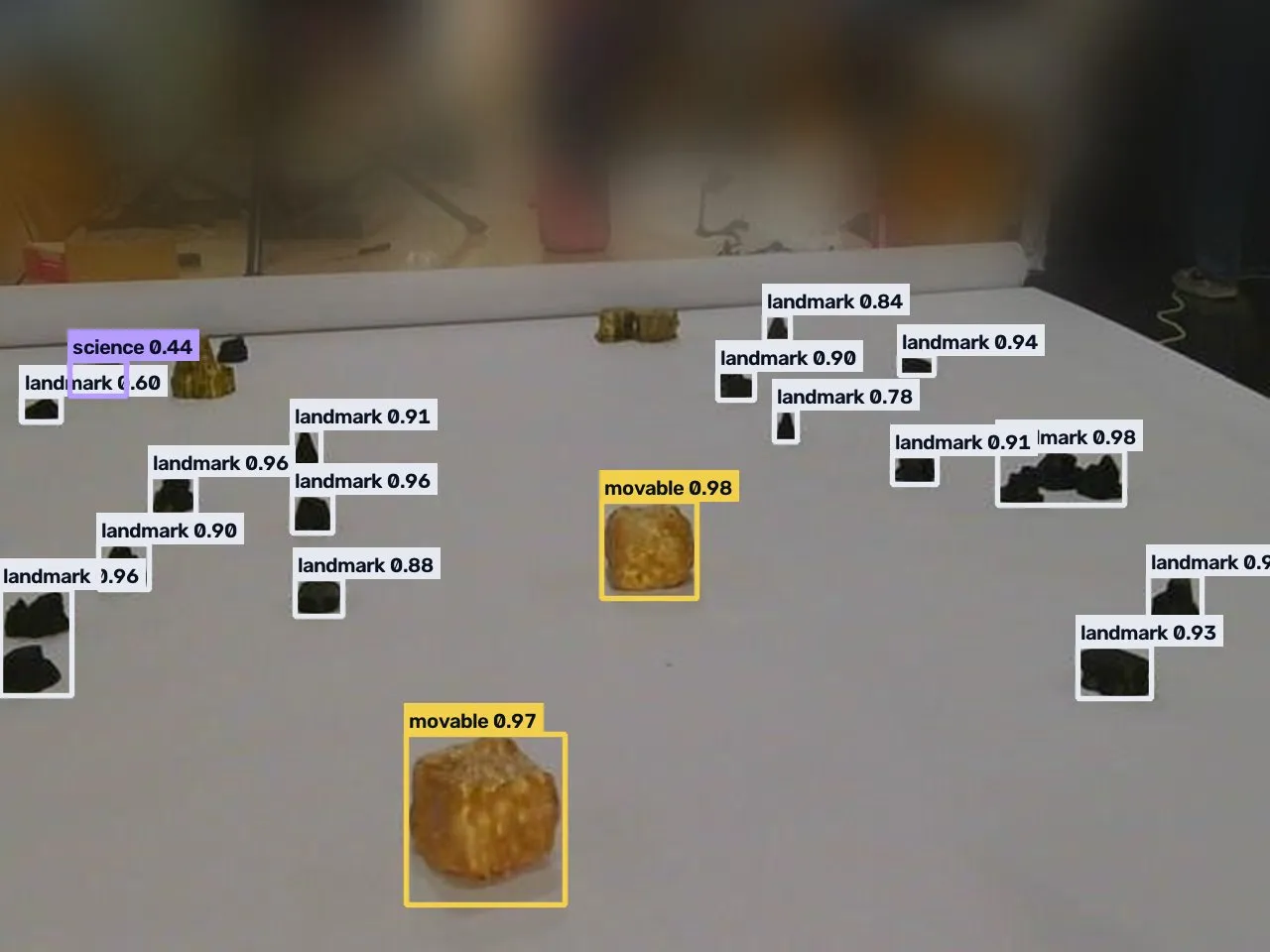
Real output of the detector on a rover frame: the orange blocks are movable, the gold rock is science, the black rocks are landmarks.
When the lighting at the venue changed, the gold rocks started looking like the block. We recorded again, relabelled and retrained. In the new light the retrained model stopped mistaking science rocks for blocks on our test frames, which matters: a confused science rock is one the arm would grab.
One rule: the AI never moves the hardware
There is a language model in the loop, for voice commands and for narrating the mission, but it only picks a skill. A deterministic executor does the driving, the approach and the grab, and it finishes its route even if the link to mission control drops, because on Mars the link drops.
The morning brief
Everything the rovers see lands on one map built on real NASA imagery: the route, every rock and its state, and before and after photos. That is what the astronaut checks over breakfast.
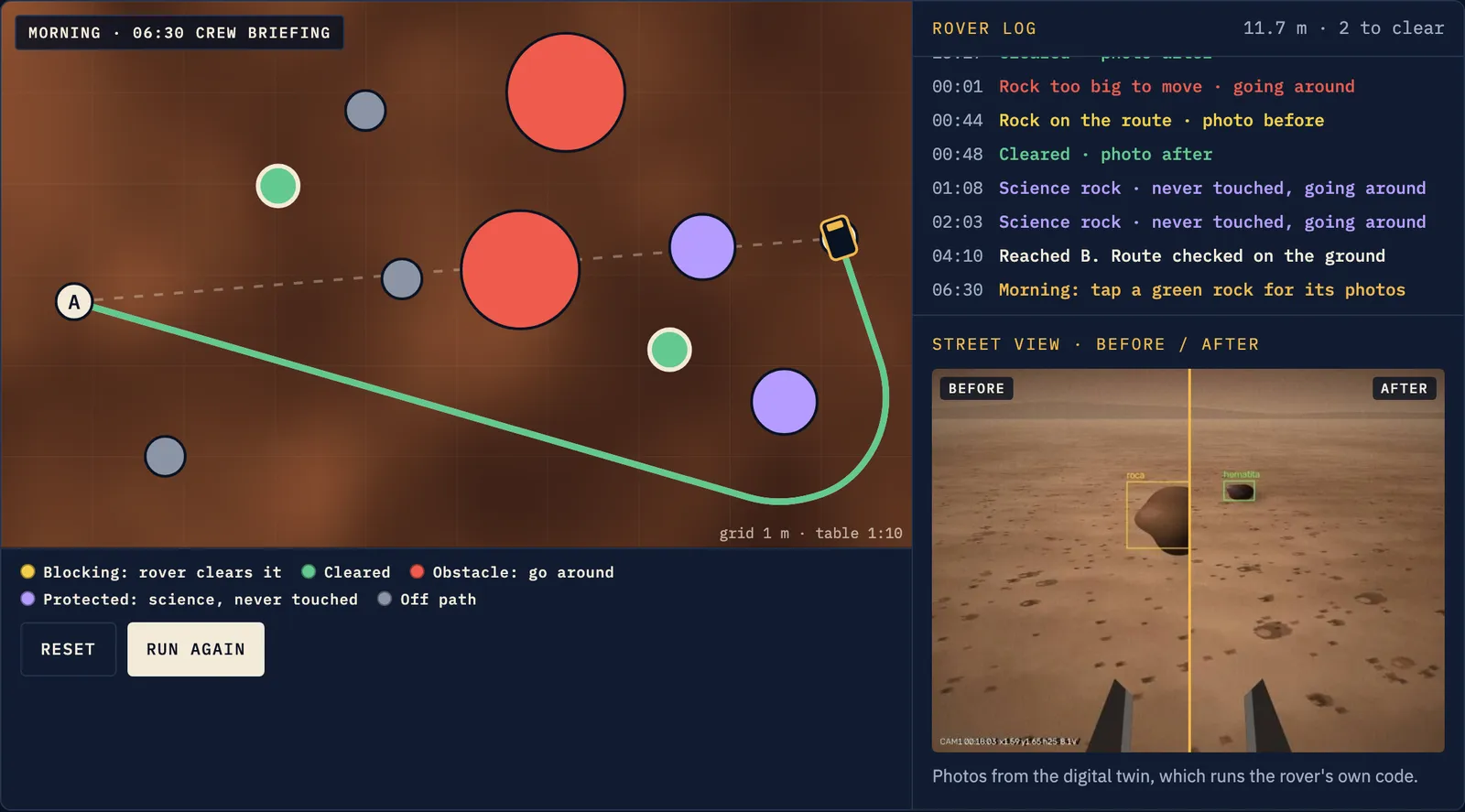
The night shift as a web demo on argus1.earth: add rocks, run the shift, and check the route in the morning with before and after photos.
What I take home
We didn’t win a prize. We did build a rover that works, a detector trained in a weekend, a digital twin and a website. I take home what I learned, the friends I made along the way and a very good experience. Thank you to the organisers for making it possible, and to my team: Danielyss, José, Lua, Enrique and Eugeni.
Everything is open: the website with the interactive demos and the 3D twin, the pitch deck and the source code.
An independent team concept, not affiliated with or endorsed by NASA. Orbital imagery: NASA/JPL-Caltech/University of Arizona (MRO HiRISE), via Mars Trek.
Drafted with AI, edited by hand. I publish it when it sounds like me.